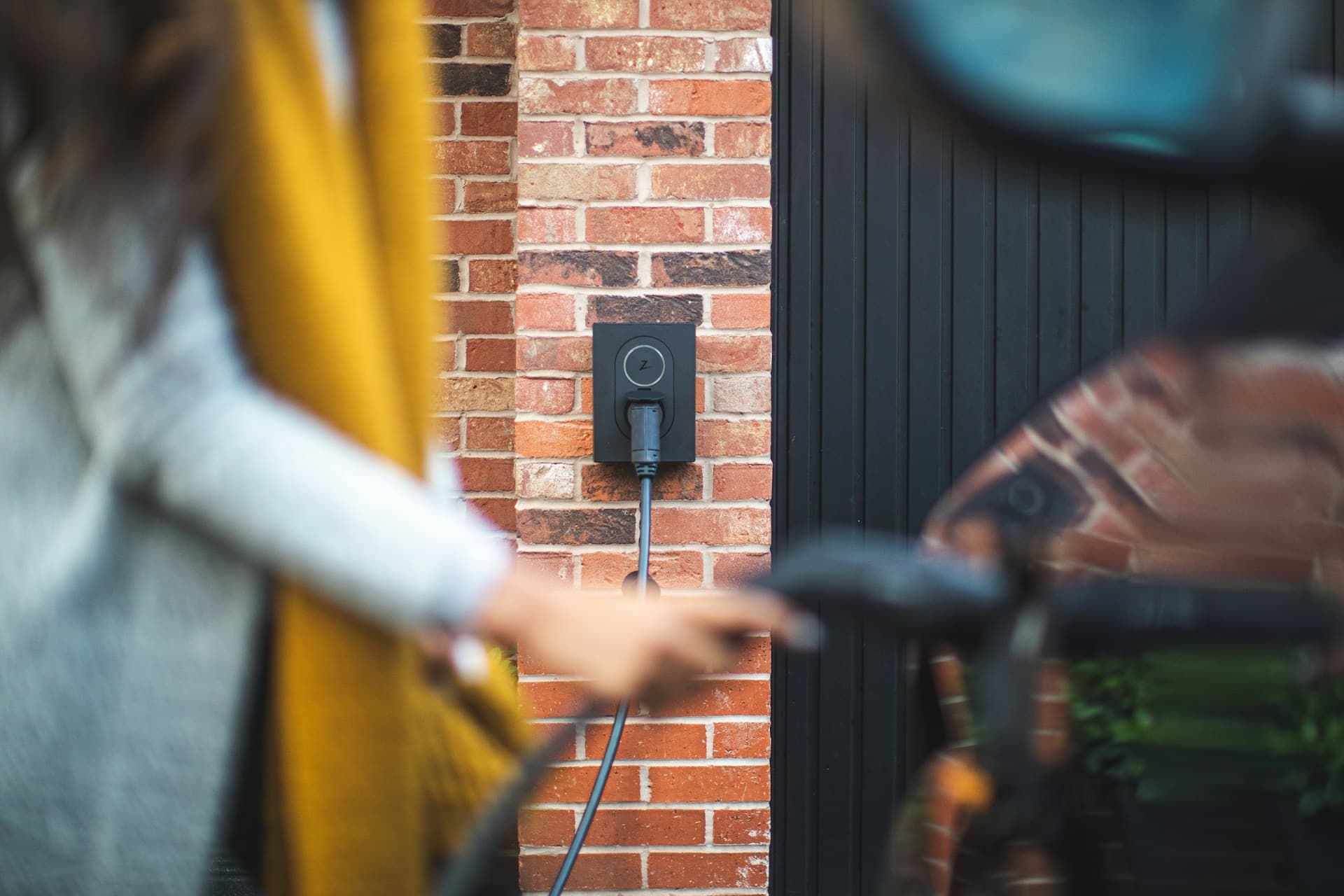

For many homeowners, the first surprise about EV charger installation is that the charger itself is rarely the main factor affecting the price.
What matters far more is the property.
Two houses on the same road can end up with completely different installation costs depending on where the consumer unit is located, how accessible the cable route is, whether the existing electrics can support the charger safely, and how straightforward the parking arrangement actually is.
That variation is especially noticeable across Brighton and Hove because the housing stock is so mixed.
Installing a charger on a modern driveway property in Hove is usually relatively straightforward. Installing one on a Victorian terrace in Hanover, a converted seafront flat, or a property with awkward rear access is often much more involved.
As a realistic guide, most standard home EV charger installations in Brighton fall somewhere between £900 and £1,600, while more complex installations involving electrical upgrades or difficult cable routing can exceed £2,000.
The important thing to understand is that these price differences are rarely arbitrary. In most cases, they reflect the amount of labour, infrastructure work, and electrical modification required to install the system safely and in compliance with current regulations.
What’s Actually Included in an EV Charger Installation?
A lot of homeowners initially assume they are mainly paying for the charging unit itself.
In reality, the installation work is usually the largest part of the overall cost.
A standard EV charger installation typically includes:
- The charger unit
- A dedicated electrical circuit
- Cabling between the charger and consumer unit
- Protective devices and isolators
- Mounting and installation labour
- Electrical testing and certification
- Part P notification where required
In straightforward properties, this process is fairly simple. The charger is mounted close to the consumer unit, the cable route is short, and the existing electrics already have enough capacity to support the additional load safely.
That’s where lower-end installation pricing usually comes from.
The price begins to rise when the property creates additional complexity. Longer cable runs, limited access, outdated electrics, solid walls, restricted parking arrangements, and fuse board upgrades all increase installation time and material costs.
That’s why online “fixed-price” EV charger advertisements can often be misleading. Until the installer understands the property properly, it’s impossible to know exactly how much work is involved.
Why Brighton Properties Often Cost More
Brighton presents challenges that installers in newer towns simply don’t encounter as often.
A large proportion of Brighton and Hove properties were built long before EV charging was ever considered. Victorian terraces, converted flats, narrow access routes, and ageing electrical infrastructure are all common across the city.
Those factors matter because EV chargers require a dedicated high-load electrical supply.
For example, many Brighton terraces have:
- The consumer unit positioned at the front of the property
- Parking located at the rear
- Limited side access
- Solid brick walls
- Cramped roof voids or floor spaces
- Older fuse boards with limited spare capacity
Running heavy-duty cabling through this kind of layout can add significant labour time compared to a modern property where the charger is positioned directly beside the consumer unit.
Converted flats create even more complications.
Permissions from freeholders or management companies may be required, parking rights have to be clarified, and cable routing through communal areas often becomes a major consideration before installation can even begin.
This is one of the reasons experienced local installers are often better equipped for Brighton properties specifically. They’ve usually already encountered these layouts many times before and can identify likely challenges early during the quotation stage.
Consumer Unit Upgrades: One of the Biggest Cost Factors
One of the most common additional costs during EV charger installation is upgrading the consumer unit.
Not every home requires this, but older fuse boards frequently lack:
- Modern safety protection
- Spare circuit capacity
- RCBO protection
- Surge protection
- Sufficient load management capability
This is particularly common in older Brighton housing stock where electrical systems may not have been upgraded for decades.
An EV charger places a significant continuous load on the electrical system, so the installation must comply with current regulations and safety standards.
If the existing consumer unit cannot support the charger safely, upgrades become necessary before installation can proceed properly.
Homeowners are sometimes surprised by this because the existing electrics may appear to “work fine” day-to-day. But EV charging introduces sustained demand that older systems were never originally designed to handle.
While this can increase installation cost initially, it often improves the overall safety and future readiness of the property’s electrical system at the same time.
Cable Routing Can Change the Price Dramatically
Cable distance is one of the biggest factors affecting labour time.
If the charger is installed directly beside the consumer unit, installation is usually relatively quick and straightforward.
But many Brighton properties are not laid out that conveniently.
We regularly see installations where the cable has to:
- Run externally around the property
- Pass through loft spaces
- Travel under floorboards
- Navigate narrow side returns
- Cross multiple rooms internally
- Avoid neighbouring access restrictions
Longer cable runs not only increase labour time but can also require heavier-duty cabling depending on charger output and installation distance.
In older properties, routing the cable neatly while minimising visible disruption often becomes one of the most time-consuming parts of the job.
This is another reason why accurate quotations require proper site assessment rather than rough online estimates.
Parking Layout Matters More Than Most People Expect
Off-street parking is generally the simplest scenario for EV charging.
A driveway with direct access beside the property usually keeps installation straightforward and relatively affordable.
But Brighton has a large number of homes without private driveways, and that creates obvious challenges.
Charging cables cannot safely trail across public pavements, and many streets simply do not have layouts suitable for easy home charging access.
Some homeowners explore:
- Pavement cable channels
- Rear access charging
- Shared parking arrangements
- Landlord permissions
- Communal charging options
However, these solutions vary significantly depending on the property and local authority guidance.
Flats can become particularly complicated because ownership boundaries, parking rights, and electrical supply arrangements are often less straightforward than standard houses.
These situations are not impossible, but they usually require more planning and assessment before installation work can begin.
Does the Type of Charger Affect Installation Cost?
Usually far less than people expect.
Most homeowners now install standard 7kW smart chargers, and while charger brands vary slightly in price, the hardware itself is rarely the main cost difference.
The installation work remains the dominant factor.
The most common charger types include:
Tethered Chargers
Tethered chargers have a permanently attached charging cable.
They’re generally the most popular option because they’re convenient for daily use and remove the need to retrieve a cable from the car every time charging is needed.
Untethered Chargers
Untethered chargers use a removable cable instead.
Some homeowners prefer them because the unit looks cleaner and more discreet when not in use.
Smart Chargers
Most modern chargers are now smart-enabled as standard.
They allow:
- Scheduled charging
- Off-peak electricity usage
- App control
- Energy monitoring
- Load balancing
- Software updates
These features help reduce long-term charging costs and improve overall efficiency, especially when paired with EV energy tariffs.
But regardless of charger type, the property infrastructure still determines most of the installation complexity.
Hidden Problems That Often Increase Installation Costs
One reason installation prices can vary so much is that certain issues only become obvious once work begins.
Some of the most common examples include:
- Deteriorating wiring
- Lack of spare ways in the consumer unit
- Inaccessible floor voids
- Hidden structural obstacles
- Damaged existing cabling
- Weak WiFi coverage near the parking area
Connectivity is becoming a bigger issue than many homeowners realise.
Modern smart chargers rely heavily on stable internet access for scheduling, monitoring, and software updates. In thick-walled Brighton terraces or basement flats, signal strength around the charger location can sometimes become problematic.
None of these issues are unusual, but they do explain why two apparently similar properties can end up with very different installation requirements.
Are EV Charger Grants Still Available?
Government support for EV charger installation is far more limited than it was a few years ago.
Most standard homeowners now fund installations privately. However, grants still exist in certain situations, particularly for:
- Flat owners
- Renters
- Landlords
- Apartment block installations
Eligibility changes regularly, so it’s always worth checking the latest OZEV guidance before proceeding.
For most Brighton homeowners though, EV charger installation is now treated more like a standard home improvement project than a heavily subsidised upgrade.
Is Home EV Charging Actually Worth It?
For most EV owners, absolutely.
Charging at home is significantly cheaper than relying entirely on public rapid charging networks, especially when charging overnight using off-peak electricity tariffs.
Convenience is another major factor.
Most EV owners quickly realise that waking up each morning to a fully charged vehicle changes how they use the car completely. Instead of planning journeys around charging stations, the vehicle simply becomes part of the normal household routine.
There’s also a longer-term property consideration.
As EV ownership continues growing across the UK, home charging capability is increasingly becoming an expected feature rather than a niche upgrade. Buyers are becoming more aware of charging access when viewing properties, particularly in urban areas where public charging availability can still be inconsistent.
For many homeowners, the question is no longer whether installing a charger is worthwhile, but how quickly the installation pays for itself through cheaper day-to-day charging costs.
Choosing the Right EV Charger Installer in Brighton
The quality of the installation matters just as much as the charger itself.
Brighton properties often require more problem-solving than straightforward new-build installations. Cable routing, ageing electrics, restricted access, and unusual layouts are all common across the city.
That’s why experience matters.
A proper site assessment should identify:
- Consumer unit suitability
- Cable routing options
- Parking limitations
- WiFi coverage issues
- Potential upgrade requirements
- Overall electrical capacity
Without that assessment, many quotations are little more than rough estimates.
At A Clearer Picture, we carry out professional EV charger installations across Brighton and Hove, helping homeowners choose systems that are practical, reliable, and suitable for the property itself rather than simply recommending the same setup everywhere.
Final Thoughts
EV charger installation costs in Brighton vary because Brighton properties vary.
For straightforward homes, installation costs are usually predictable and relatively contained. For older terraces, converted flats, and more complex layouts, the additional cost generally reflects the extra labour and electrical work required to install the charger safely and reliably.
The charger itself is only one part of the system.
What matters most is the quality of the electrical infrastructure behind it, the suitability of the installation design, and whether the work is carried out properly for the property.
A well-installed EV charger should feel seamless to use day after day — safe, reliable, and ready for long-term everyday charging.