
A television picture that freezes, pixelates or disappears altogether can be extremely frustrating, particularly when the problem only appears during bad weather or halfway through something you are watching.
Poor reception is not always caused by the television itself. The fault could be anywhere between the transmitter or satellite and your screen, including the aerial or dish, external cabling, wall socket, signal amplifier, splitter, receiver or communal distribution system.
Brighton and Hove also presents some particular installation challenges. Hills, varied roof heights, dense rows of buildings, converted flats and exposed coastal locations can all affect how a reliable television signal should be received and distributed.
Understanding the symptoms can help identify whether you need a simple adjustment, a cable repair or a complete replacement.
Is the Problem With Your TV Aerial or Satellite Dish?
The first step is to establish how your television service reaches the property.
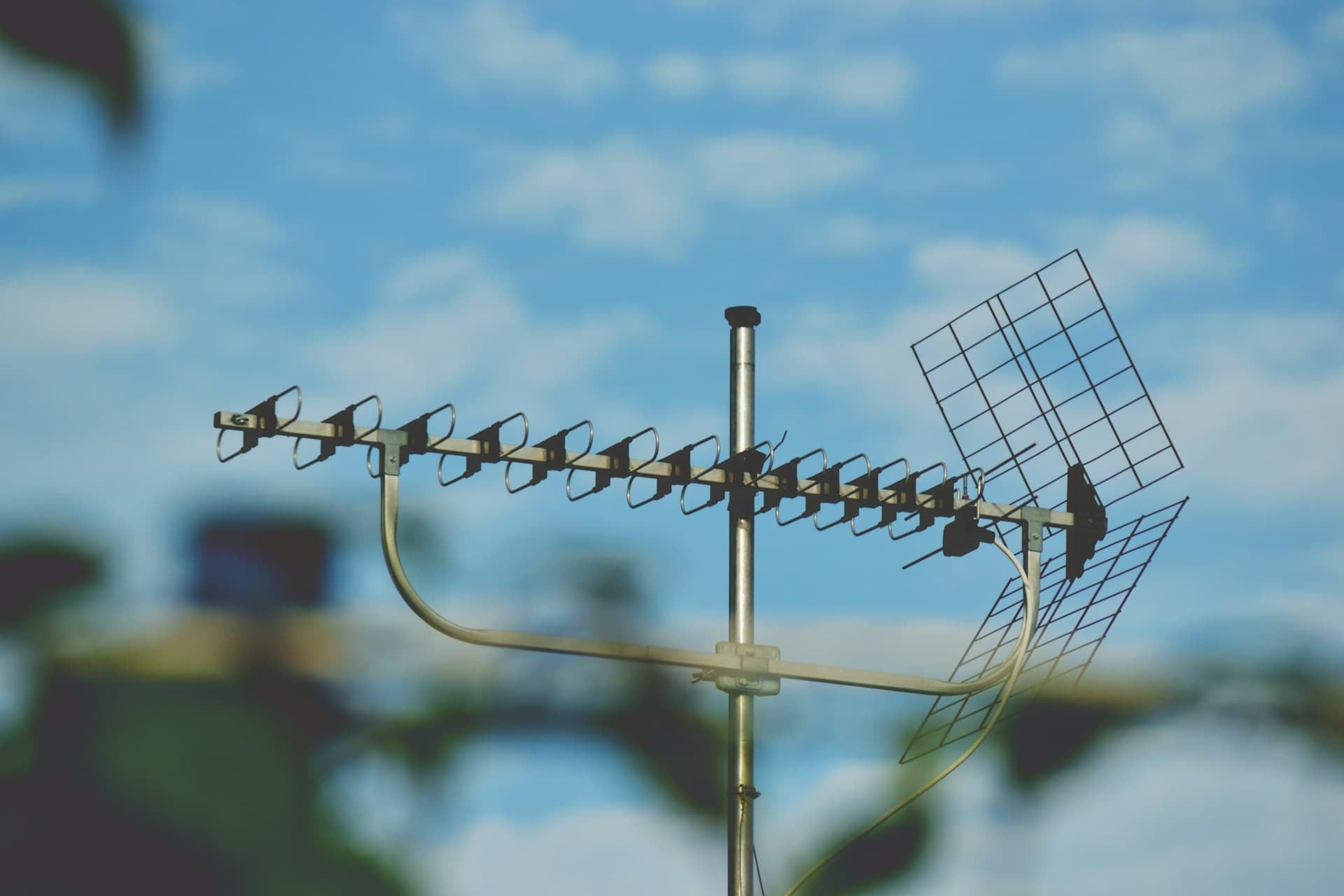
Freeview is normally received through a television aerial. The aerial collects terrestrial broadcasts from a local transmitter and sends them to your television or Freeview box through coaxial cable.
Freesat and traditional Sky services use a satellite dish. The dish must have a clear line of sight towards the relevant satellites and be aligned accurately enough to maintain a stable signal.
Streaming services such as Netflix, BBC iPlayer and Disney+ use your broadband connection instead. If streaming apps are buffering but live television remains clear, the issue is more likely to involve your broadband or home network than your aerial or satellite system.
Where both live television and streaming are affected, there may be more than one problem or an issue with the television, receiver or internal wiring.
Common Signs of a TV Reception Problem
Reception faults can present themselves in several ways:
- The picture breaks into coloured blocks or pixels.
- The sound cuts in and out.
- Some channels work while others are missing.
- The television displays “No Signal”.
- Reception becomes worse during rain or strong wind.
- One television works correctly but another does not.
- The signal disappears when another device is switched on.
- Freeview channels need to be retuned repeatedly.
- Freesat or Sky reports a low or absent satellite signal.
These symptoms do not automatically mean that a new aerial or dish is required. A proper signal test can determine where the signal is being lost before equipment is replaced unnecessarily.
A. The Aerial or Dish Has Moved
An aerial or satellite dish must be securely mounted and correctly positioned.
Strong wind, deteriorated brackets, loose fixings or previous building work can cause equipment to move. Even a relatively small change in a satellite dish’s alignment can reduce reception because the dish must point towards a precise area of the sky.
A displaced television aerial may still receive some channels while struggling with others. This can make the fault appear inconsistent, particularly when weather conditions change.
An installer can check the mounting hardware, test the available signal and realign the aerial or dish accurately.
B. Damaged or Weathered Cabling
External coaxial cable is exposed to sunlight, rain, wind and temperature changes throughout the year. Over time, the outer covering can crack or become brittle.
Water can then enter the cable or its connections. This may cause:
- Intermittent reception
- Signal loss during wet weather
- Corroded connectors
- Reduced picture quality
- Complete failure of the connected television point
Loose connections behind the television or at the wall socket can cause similar symptoms.
Simply replacing the visible connector may not solve the problem if moisture has travelled further along the cable. The cable route and signal level should be checked to locate the actual fault.
C. An Old or Unsuitable TV Aerial
Aerials do not necessarily stop working suddenly. Performance can gradually deteriorate as elements become loose, brackets corrode or connections become exposed to moisture.
An aerial may also be unsuitable for the signal available at a particular address. Reception varies by location, terrain, nearby structures and the transmitter serving the property.
A larger or more powerful aerial is not automatically better. Excessive signal can create reception problems just as insufficient signal can. The correct equipment should be selected after measuring the signal at the property.
D. Faulty Splitters, Amplifiers or Distribution Equipment
Many homes distribute one aerial or satellite system to several rooms. This may involve passive splitters, powered amplifiers, distribution units or multiswitches.
Every time a signal is divided, its available strength must be considered. A badly designed system may work on one television but provide an unstable signal elsewhere.
Problems can arise when:
- An amplifier loses power.
- A splitter has been installed incorrectly.
- More television points have been added over time.
- Low-quality connectors introduce signal loss.
- An amplifier boosts interference as well as the wanted signal.
- Old communal equipment no longer performs reliably.
A signal amplifier should not be used automatically whenever reception is poor. If the original signal is damaged or affected by interference, amplification may make the problem worse.
E. Problems With a Communal Aerial or Satellite System
Many flats in Brighton and Hove use communal television systems.
A shared aerial or dish may distribute signals through amplifiers and cabling serving several properties. A resident may therefore experience poor reception even when their television and internal lead are working correctly.
It is worth asking neighbours whether they have noticed the same issue. If several flats are affected, the fault may be within the communal system and could require involvement from the freeholder, landlord or managing agent.
If only one flat is affected, the issue may be with the cable, wall plate or equipment serving that individual property.
F. Transmitter Work or Temporary Service Disruption
Not every reception problem originates at the property. Planned engineering, transmitter maintenance and temporary service disruption can affect Freeview reception.
Before retuning every television, check whether work is taking place at the transmitter serving your address.
Repeatedly retuning during a temporary outage may leave channels missing until the signal returns. It is therefore better to establish whether the problem is external before changing the television’s stored channel list.
G. New Buildings, Scaffolding or Nearby Trees
The route between an aerial and transmitter can be affected by the surrounding environment.
A new development, scaffolding, roof extension or growing tree may obstruct or reflect the signal. Digital television can be particularly sensitive to reflected signals arriving at slightly different times.
Satellite reception requires a sufficiently clear line of sight. Trees and new structures can therefore affect a dish that previously worked without problems.
Moving the receiving equipment to a more suitable position may solve the issue, but the new location should be tested before permanent installation.
Why Reception Can Vary Across Brighton and Hove
Television reception is highly location-specific.
A property near the seafront may have a very different installation environment from a home in Patcham, Woodingdean, Portslade, Rottingdean or central Hove.
Elevation, surrounding buildings, roof access and the direction faced by the property all influence the most appropriate setup.
The city also contains many converted buildings, listed properties and conservation areas. Restrictions may affect where satellite dishes or television aerials can be positioned.
Where external equipment needs to be replaced or repositioned, a discreet location may need to be balanced against signal quality, access and any relevant planning or lease restrictions.
Checks You Can Make Before Calling an Installer
A few basic checks can help narrow down the problem safely.
Check Whether Every Television Is Affected
If only one television has a problem, try a different aerial lead and check the wall connection.
If every television is affected, the fault is more likely to be near the aerial, satellite dish or distribution equipment.
Restart the Television or Receiver
Switch the television, Freeview box, Freesat receiver or Sky box off completely before restarting it. This can eliminate a temporary equipment fault.
Inspect Accessible Cables
Look for loose plugs, sharply bent cables or visible damage.
Do not climb onto the roof or attempt to reach external equipment from a ladder.
Check Other Properties
Ask a neighbour using the same type of television service whether their reception is affected. This is particularly useful in blocks with communal systems.
Check for Engineering Work
Check for temporary transmitter maintenance or service interruptions before retuning terrestrial television channels.
If the problem continues, professional signal testing is usually more effective than replacing components through trial and error.
Should the Aerial or Dish Be Repaired or Replaced?
Repair is often appropriate when the main equipment remains in good condition and the fault is limited to:
- A loose bracket
- Incorrect alignment
- A damaged connector
- A short section of failed cable
- A defective wall plate
- A faulty splitter or amplifier
Replacement may be more economical when the aerial or dish is badly corroded, physically damaged, unsuitable for the property or difficult to repair safely.
The decision should be based on the condition of the complete system rather than its age alone.
Could Satellite Be Better Than an Aerial?
Where reliable terrestrial reception is difficult, Freesat may provide a practical alternative. It offers subscription-free satellite television through a compatible television or receiver.
Conversely, a properly installed television aerial may be the simpler choice for households primarily watching Freeview channels and wanting to avoid unnecessary equipment.
The best option depends on the available signal, required channels, number of rooms and installation constraints. It should not be decided solely by buying the largest aerial or repositioning an existing dish without testing.
Professional TV Aerial and Satellite Repairs in Brighton & Hove
A Clearer Picture provides television aerial and satellite installation, fault-finding and repair services throughout Brighton, Hove and the surrounding East Sussex area.
Whether the problem is a pixelated Freeview picture, damaged aerial, misaligned satellite dish or unreliable multi-room system, the aim is to identify and correct the underlying fault.
A properly tested and installed system should provide stable reception throughout the property without unnecessary equipment or repeated temporary fixes.
Contact A Clearer Picture for a free aerial or satellite quotation.